Spots and accumulation of dirt can be removed from antique rugs by scrubbing soap into one part of the rug at a time and rinsing it out immediately. After scrubbing, the rug should be dried as quickly as possible, lying face up—never hung up to dry. Sunlight will not harm old hooked rugs, but they should not be left out of doors for protracted periods. Hooked rugs, new or old, should never be washed by being placed in a bath.
Elizabeth Waugh and Edith Foley, Collecting Hooked Rugs, 1927
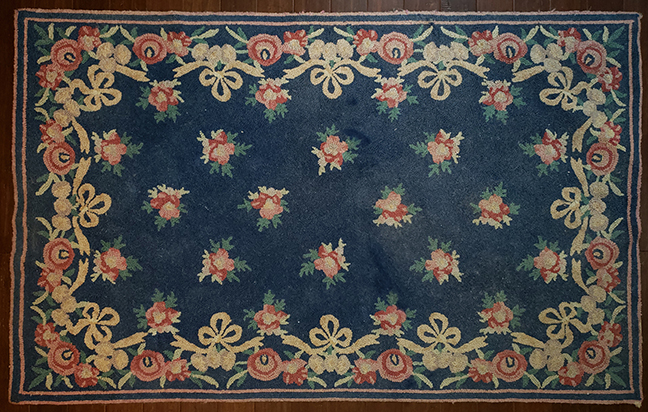
Pearl, 41”x65” before washing (above) and after washing (below)
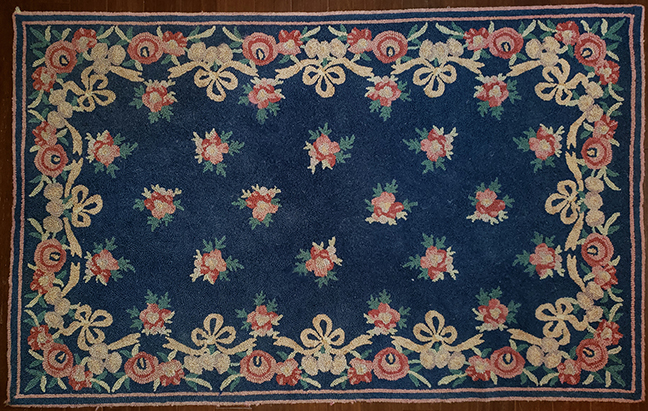
To wash a hand-hooked rug is a simple process. No need to get the rug soaking wet, especially if the old rug is hooked on a burlap backing. But a simple hand washing can really brighten up an old rug.
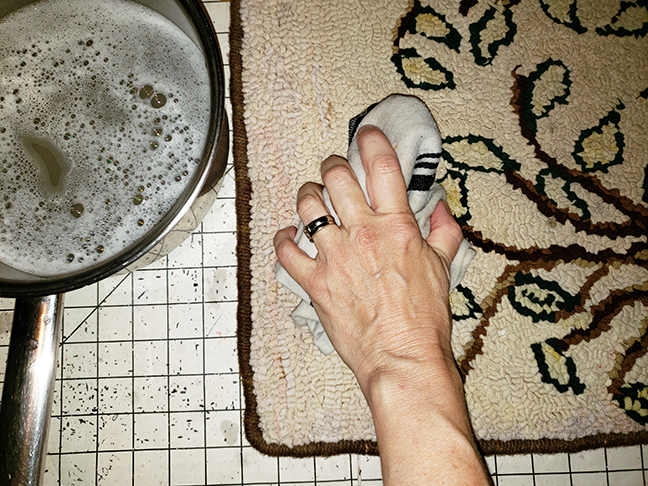
Basic Washing Instructions:
I begin with two pans of warm water (about 2 cups in each). In one pan, I put a tablespoon of laundry detergent (you don’t need suds). If you are using powdered detergent, make sure the flakes dissolve completely. In the other pan, I add a splash of white vinegar to the plain water. This is good for the wool and tastes nasty to wool moths.
Dipping a clean rag in the soapy pan, squeeze the rag almost all the way out. Remember, you don’t need to get the rug soaking wet, just enough moisture to remove the dust, hair and grit that clings to the surface. I press the rag down on the rug and pivot, gently scrubbing the surface, one small area at a time.
Using a different rag in the vinegar rinse, I repeat the same process, removing some of the soap from the surface of the rug.
Hand washing is quite easy, but don’t take your hooked rugs to a dry cleaner. That process can damage this type of rug.

In between washings, you can vacuum a rug, but do it carefully! I always examine my rugs, top and bottom before vacuuming, making sure there are no little strands that have become unhooked. I used to only use a hand-held vacuum, or only the appliance hose on my regular vacuum. But invariably, I couldn’t remember where I left the Dustbuster, or I was in a hurry, and I discovered that my regular vacuum cleaner on a high setting worked well on my hooked rugs and hasn’t caused me any problems.
You can also just sweep the surfaces (top and bottom) of hand-hooked rugs. Again, common sense prevails. Don’t sweep them roughly. It’s not recommended that you beat a hand-hooked rug. The simple way is best.
As William Winthrop Kent wrote in his book, The Hooked Rug (1930), most folks of yesteryear would wait for a good powdery snow, take the rugs outside, put snow on top, sweep it off, and bring them inside to dry.
In all things rug hooking, I like to follow the KISS method:
“Keep It Simple Sweetie.”

Daddy, 20.5”x29” Designed by Judy, Gwendolyn and Colleen Taylor. Unwashed (above) and washed (below).

My rugs at Rose Cottage get extremely hard wear, yet some of them will go three to five years before they need shampooing. I advise the same care in cleansing them that you would use with any prized possession. I have cringed when I heard some women say they put their rugs in a washing machine. I would as soon put a baby through such a bath.
Pearl McGown, You Can Hook Rugs, 1951
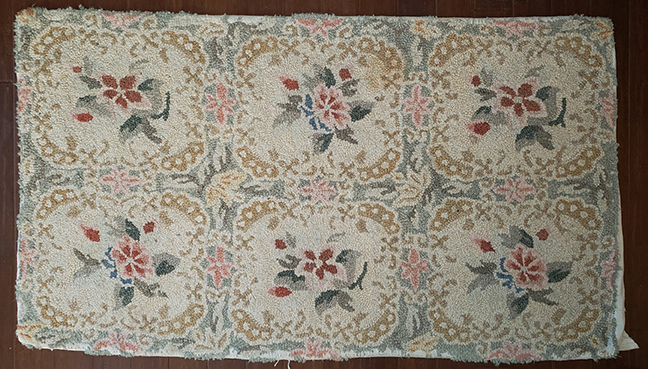
Mattie, 35”x61.” Wool yarn on cotton
Believe it or not, this rug did get put through the washing machine! Read about the repair in Chapter 10, Gallery of Projects .
Hook in the manner described above and your rug will last for many, many years, giving you good service continually. The reason these rugs will last is because they are made of either new or good woolen materials on good quality burlap, cut in fine strips, and drawn not too high through almost every mesh of the burlap and not clipped, thus achieving a firm, tight nap that will stand wear, vacuuming, and other cleaning methods without loops pulling out.
Vera Bisbee Underhill and Arthur J. Burks, Creating Hooked Rugs, 1951
Storing your rugs: Never fold a rug if it is going to be stored for a long period of time. The best way to store a rug is to roll it up, design side out, and wrap it in a sheet. Keep it in a place with low humidity and check it periodically for wool moths. You’re more likely to get moth damage on a rug that’s in storage. Moths like things that don’t get handled often. They like your wool suits hanging in the closet a lot more than your oft-used winter coat for that reason. And who has ever seen a wool moth on the back of a sheep?

If you do encounter anything that looks like webbing on a rug, pinch the critter off and dispose of it (the bug, not the rug). If ever in doubt about wool moth exposure, put the item outdoors in a hefty bag on a below-freezing night, or if it’s a small enough rug, in your freezer overnight. That will destroy any eggs too small for you to see. It’s a good idea to lift a rug in front of a window, checking for holes or gaps where the light shines through, revealing moth damage or holes too small to see from a standing view.
Although rug hooking is an ancient art, to each generation it ever presents a new medium for self-expression. This art has, through the centuries, been developed more and more. In our generation, I believe it has reached a plane never before attained.
Helen King, How to Hook Rugs, 1948
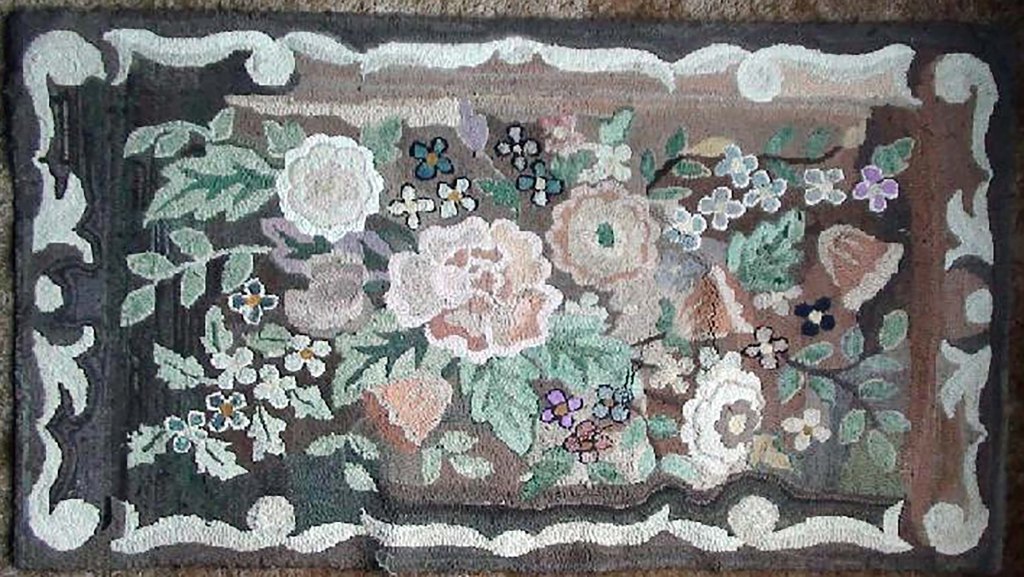
Josephine, 27”x40.5.” A charming old rug hooked with silk and cotton stockings. I love how the hooker just kept going. When she ran out of one stocking, she continued with whatever she could get her hands on!
Next Chapter: Backing the Winner
 Judy Taylor Books